

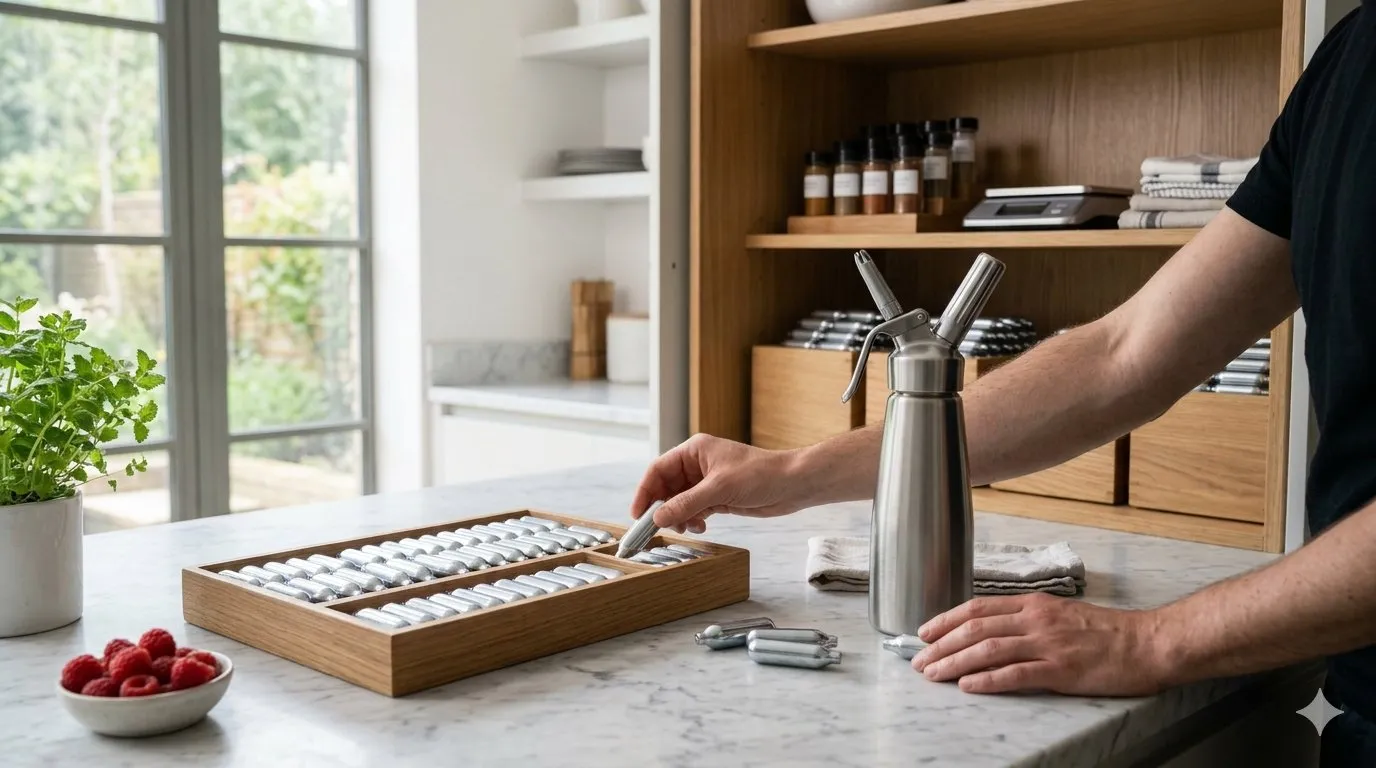
Cream chargers are small pressurised cartridges containing food-grade nitrous oxide, designed for use with standard whipped cream dispensers. Like any other pressurised product, they need careful handling, correct storage and sensible, informed use. Many avoidable accidents happen because people ignore basic rules or misunderstand what the product is for. This guide explains clearly how to store and use chargers safely, how to check product quality, and why responsible, food-only use matters for your own health, your household and your community.
What Cream Chargers Are For
Cream chargers exist for one simple purpose: preparing food and drink in a suitable cream dispenser. The gas dissolves into liquid under pressure, creating light foams, whipped cream and quick infusions. They are not toys, and they are definitely not intended for any other use. Reading the packaging and the dispenser manual carefully before your first use is essential, as it explains the correct pairing of chargers and bottle size for your model, along with the maximum quantity of liquid allowed.
Checking Quality and Labelling
Always choose chargers that clearly and plainly state they contain food-grade nitrous oxide, often labelled E942. Look for clear product identification, supplier information, relevant traceability details and appropriate safety labelling. Packaging requirements vary by product and jurisdiction, so an expiry date is not mandatory in every case. Avoid unmarked cartridges, damaged boxes or poorly sealed packs. Low-quality chargers may contain impurities or be poorly sealed, which can affect both safety and flavour. If something seems wrong with a cartridge, such as dents or rust, do not use it at all, and return it to the seller.
Safe Storage at Home
Store chargers in a cool, dry place away from direct sunlight, radiators, ovens and other heat sources. Pressurised cartridges can be damaged by high temperatures, so never leave them in a parked car, a shed or near a stove. Keep them in their original, sealed packaging, inside a cupboard that children and pets cannot reach. Do not drop, puncture or crush them. A tidy, dedicated storage spot reduces the risk of accidents and makes it easier to track exactly how many remain.
Handling During Use
Insert only one charger at a time, never force it in, and use the holder supplied with your dispenser. Make sure the head is screwed on firmly before you tighten the charger. Never attempt to open a bottle that still contains pressure, and never point the nozzle at yourself or anyone else. Empty cartridges can feel very cold after use, so handle them carefully. Follow the manufacturer’s written guidance exactly, and never modify the equipment or try to refill a used charger.
Disposal and Recycling
Used chargers should be fully empty before any disposal. Check the manufacturer’s instructions and local recycling rules before disposing of chargers or cylinders. Pressurised containers may require specialist collection, and household metal recycling is not suitable for every type. Never put pressurised or partly used cartridges in a fire, a compactor or a regular bin without checking the instructions. Keep empty cartridges out of reach of children until they are safely disposed of. Responsible disposal protects waste workers, neighbours and the environment, and it is simple once the routine is firmly established.
Health Risks of Misuse
Nitrous oxide is safe when used correctly in food preparation, but inhaling it for any reason is dangerous. Misuse can deprive the brain of oxygen, cause fainting, falls and accidents, and lead to lasting nerve damage and vitamin B12 deficiency. Serious harm has occurred even after short periods of use, and risks rise with repeated use. Chargers are strictly for the kitchen. Anyone worried about their own use, or someone else’s, should seek advice from a doctor or a local health service without delay.
Legal Responsibilities
Rules on supplying and possessing nitrous oxide vary widely between countries and regions, and several have introduced restrictions to prevent misuse. In some places, supplying it for inhalation is a criminal offence. Never simply assume that a product is legal to buy everywhere. Check your local laws before buying, keep proof of purchase from your supplier, and use it only for genuine culinary purposes. Responsible suppliers also ask for age confirmation before they sell, and they should explain these rules clearly.
Conclusion
Safe culinary gas use begins long before a dispenser is charged. Read the product and equipment labels, store cylinders away from heat, keep them inaccessible to children and follow the applicable local disposal rules. Different container formats may need different recycling arrangements, so never assume every empty cylinder belongs in household waste. Buyers reviewing food-grade nitrous oxide products can consult smartwhip.eu for relevant product details. The central principle remains straightforward: these products are intended for legitimate food preparation, never inhalation.
